What Would Happen to Life on Earth if All the Liquid Fresh Water Were Used Up?
Water Stewardship
Virtually every business sector is water-dependent in some way or another. Issues of water scarcity and poor water quality have meaning and growing social, environmental and economic consequences. Yet many businesses are simply get-go to understand what fresh water means to them, their profits, and their visitor's long-term viability.
WWF's piece of work on water stewardship helps governments, companies, investors and others understand their water footprints and become better h2o stewards. Stewardship goes beyond existence an efficient water user. It is a journeying that begins with contributing to the responsible, sustainable direction of freshwater resources disquisitional to business operations. But the journey doesn't end in that location. Beyond awareness, understanding and internal action, WWF urges companies to look outside their own operations, supporting local watershed conservation and engaging in commonage efforts to advocate, support and promote better basin governance, for the benefit of people and nature.
Partnering to promote private sector water stewardship at the global level
Protecting our freshwater resources cannot be achieved lone. WWF looks across sectors to partner with organizations like Coca-Cola Company, United Nations' CEO Water Mandate and the Earth Economic Forum in our shared pursuit of a water secure future. We support and pb numerous basis-breaking initiatives including the Alliance for Water Stewardship'due south standard, United Nations-supported Principles for Responsible Investment (PRI)'south piece of work with investors, and water footprinting and mapping tools such every bit the Water Adventure Filter. The data backside the Water Adventure Filter and like WWF projects has already been used past more than 2000 companies to map over 50,000 vendor sites in their supply chains. Equally role of the White Firm Climate Data Initiative, WWF committed to expanding, maintaining and sharing that data in partnership with leading applied science companies. Such resources will empower manufacture, financiers and policymakers to strengthen global water stewardship, food security and climate resiliency.
Engaging with individual businesses to reduce the impacts of their h2o use
Today, companies with global operations, such as The Coca-Cola Company, Sodexo, and Procter & Gamble, partner with WWF to address the local impacts and risks associated with their water use. And these efforts are resulting in real gains for conservation. For example, our collaboration with The Coca-Cola Company and its bottling partners has gear up a goal to meliorate water efficiency 20 percent past 2012. Since 2004, these joint efforts have led to a reduction of sixteen%. By the end of 2012, the partnership is expected to salvage upwardly to 50 billion liters of water annually—that's the equivalent of 20,000 Olympic-size swimming pools.
Developing standards for international water stewardship
Working together with The Nature Salvation, the Pacific Institute and others, WWF helps to promote the utilize of freshwater in a way that is socially beneficial, environmentally responsible and economically sustainable through the Brotherhood for Water Stewardship (AWS). AWS offers a variety of ways to improve, incentivize and recognize responsible h2o utilize, including helping members engage key stakeholders within their watershed and supply chain. Afterward years of evolution, AWS launched its International Water Stewardship Standard in April 2014. This standard, which is 1 of the first global freshwater standards, has great potential to address WWF's main water stewardship goals of achieving responsible water governance, sustainable h2o residue, skillful h2o quality and protection/restoration of important water areas. This will harness the resource of corporations and governments to steward freshwater for humans and nature.
Managing Water Resources in a Changing Climate
WWF has collaborated with local stakeholders and governments in disquisitional river basins around the earth to assess climate change vulnerability and plan interventions. Because institutions are central to the fashion water resources are managed, WWF has likewise engaged institutional partners to investigate what all-time positions water management institutions to effectively adapt to climatic change. By working bottom-up in the field, where many impacts are already being felt, equally well every bit elevation-downwards with institutions, which influence h2o direction decisions, we hope to safeguard a future where both human and environmental needs are met, in spite of the climate uncertainties we currently face.
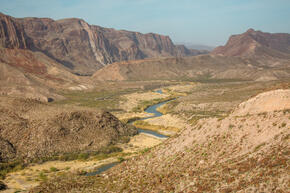
Learn more about WWF's work and h2o security in the Chihuahuan Desert.
Conserving Freshwater Habitats
WWF works together with communities, businesses and governments to conserve, protect and restore freshwater habitats across the earth. Near 75% of new sites included in the Ramsar List of Wetlands of International Importance since 1999 are the result of WWF'due south work at dissimilar levels. WWF's global goal of conserving and protecting freshwater across the world, requires local action with local partners. For case in the iconic Yangtze River Basin—the longest river in Mainland china and 3rd longest in the world—WWF is works with local people and scientists in the headwaters to protect and restore the function of the earth's largest high altitude wetland.
We also helped establish a new protected area in and around Lake Niassa located in Due east Africa. Also known as Lake Republic of malaŵi, the lake is the ninth largest in the world and is role of three countries – Republic of malaŵi, Mozambique, and Tanzania. Information technology is too abode to over 1,000 species of fish. By bringing together governments, local communities and concern interests, WWF'due south efforts led the regime of Mozambique to plant the Lake Niassa Partial Reserve. Lake Niassa is now the first freshwater lake under protection in that land and volition help secure freshwater fish supplies for years to come up.
Supporting Water Security
WWF works to secure the correct volume, timing and amount of water in a river and then people and nature tin can thrive. Working across the globe, WWF supports responsible water utilise and infrastructure. Sometimes that work involves numerous partners across state borders equally demonstrated past our work on the Rio Grande. This river, likewise known as the Rio Bravo, serves equally office of the border betwixt the Us and United mexican states. Located in the Chihuahuan Desert, this river provides water to some of the fastest-growing urban areas in the United states and provides water to thousands of farms and ranches. However, over the past century, growth in human population—and the agricultural and urban development that accompanies it—has put enormous stress on the region. The result is a mounting ecological crisis that threatens the survival of wild fauna and people.
Today, many of the Rio Grande'southward species are endangered, and almost one-half of its original population has already gone extinct. WWF works to restore water flows along seven important sites along the Rio Grande and its primary tributaries, the Pecos River and the Rio Conchos. One of those sites is the Big Bend where in 2011 the United States and United mexican states developed a working plan to cooperate in the protection and preservation of the area.
Helping Local Communities and Governments Conserve Iconic H2o Basins
Across operational improvements, collaborations with the private sector as well helps local communities and governments to conserve some of the world'southward well-nigh iconic river basins. For example, corporate support for Republic of guatemala'southward Water Fund is protecting the deject forests of the Sierra de las Minas Biosphere Reserve – the source water for downstream operations. Through reforestation activities and the introduction of sustainable agriculture methods, the Fund is securing h2o supplies while demonstrating the benefits of individual investment in freshwater conservation and river basin management.
Source: https://www.worldwildlife.org/industries/freshwater-systems
0 Response to "What Would Happen to Life on Earth if All the Liquid Fresh Water Were Used Up?"
Enviar um comentário